The Montana State Capitol is the most architecturally distinguished and most historically significant public building in Helena, Montana — a Neoclassical landmark completed in 1902 whose copper-sheathed dome, imposing granite facade, and the legislative chambers, governor’s offices, and public spaces within its walls give Helena its identity as the seat of state government for one of the American West’s most geographically expansive and most resource-rich states.
Located on a prominent rise on Sixth Avenue in Helena’s downtown core, the Capitol building anchors the civic identity of a capital city whose selection as Montana’s seat of government in 1894 — following a bitterly contested legislative battle between Helena, Anaconda, Bozeman, and Butte — established the city’s permanent role as the administrative center of a state whose copper mining economy, agricultural landscapes, and vast public land holdings make its government functions consequential for residents across 147,000 square miles of Big Sky Country.
For Helena residents, Lewis and Clark County families, and anyone seeking to understand the architectural heritage, political history, and civic identity of Montana’s capital city, the State Capitol and its surrounding government campus provide an essential and deeply rooted lens.
The Architecture and Construction of the Capitol
The Montana State Capitol’s Neoclassical design — executed by the architectural firm of Bell and Kent, with the original building completed in 1902 and significant wings added between 1909 and 1912 — reflects the architectural ambitions that late nineteenth and early twentieth century American state governments brought to their capitol buildings as expressions of institutional permanence, civic dignity, and the prosperity that territorial statehood represented for communities that had recently emerged from frontier conditions.
The building’s exterior of Montana granite quarried from the region surrounding Helena gives it a material connection to the state’s geological character, its grey stone facade rising to the distinctive copper dome whose green patina has become the most recognizable element of Helena’s skyline.
The Capitol’s interior features the original legislative chambers where Montana’s House of Representatives and Senate conduct the state’s legislative business, the governor’s reception room whose historic furnishings and Charles M. Russell mural give it a ceremonial character befitting the office’s constitutional significance, and the grand rotunda whose interior dome and decorative program reflect the civic ambitions of the building’s designers.
The Montana Historical Society Capitol education page maintains current information on tours, public access, and the historical interpretation programs that give Helena residents and visitors direct engagement with the building’s architectural and political heritage.
Helena’s Selection as Montana’s Capital
Helena’s emergence as Montana’s state capital was not predetermined by its size or its geographic centrality but was instead the product of a sustained political contest — the “Capital Fight” of the 1890s — in which the copper mining interests of Anaconda’s William Clark and the commercial ambitions of Helena’s established merchant and banking community competed for the political prize of capital designation whose economic and institutional benefits would shape the winning city’s development for generations.
The 1894 referendum that settled the contest in Helena’s favor by a margin of approximately 27,000 votes to 16,000 gave the city the permanent governmental status whose legislative, judicial, and executive functions have sustained its economy and its urban identity through the fluctuations of the mining, agricultural, and tourism economies that have shaped Montana’s broader development.
The capital designation brought to Helena the governmental infrastructure — the state office buildings, the federal courts, the legislative support services, and the lobbying and advocacy organizations whose activity concentrates in capital cities — that distinguishes Montana’s capital from the larger but less institutionally diversified cities of Billings and Missoula.
The Montana Historical Society maintains the historical documentation, museum collections, and archival resources that preserve the record of Helena’s capital fight and the broader sweep of Montana’s political and social history whose evidence the society’s collections make accessible to researchers and residents alike.
The Capitol Campus and Government Complex
The Montana State Capitol does not stand alone but anchors a broader government campus whose office buildings, the adjacent Supreme Court building, and the surrounding institutional structures give Helena’s downtown its distinctive character as a working capital city rather than merely a historic preservation district.
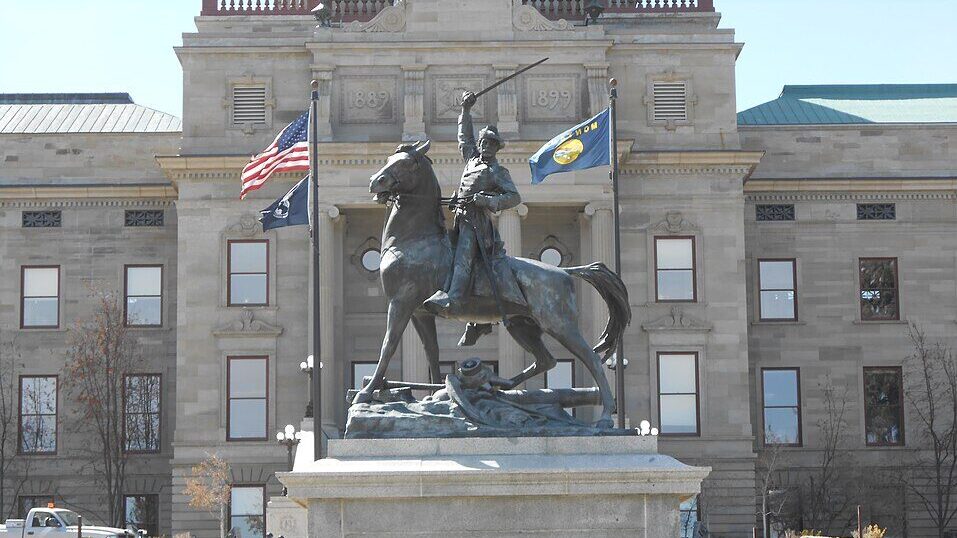
The campus’s landscape — the formal grounds, the statue of Thomas Francis Meagher on horseback at the Capitol’s main entrance, and the walking paths that connect the building to the surrounding government complex — gives Helena residents and visitors a public outdoor space whose civic character reflects the governmental functions the campus houses.
The Supreme Court building, whose proximity to the Capitol reflects the constitutional design that separates but physically connects Montana’s judicial and legislative branches, gives the government campus its full institutional complement and gives Helena’s downtown its most concentrated expression of the state’s constitutional structure.
The ongoing stewardship of the Capitol building and its campus by the Montana Department of Administration reflects the state’s commitment to maintaining the architectural integrity and functional capacity of its most significant public building across the successive renovation and restoration projects that a century-old structure requires.
Montana’s Climate and the Capitol’s Built Environment
Montana’s continental climate creates the specific seasonal context within which the Capitol building and Helena’s government campus function across the calendar year — the cold, snowy winters that define the northern Rocky Mountain climate delivering the conditions that test historic masonry construction and that give the Capitol’s copper dome its most dramatic visual setting against the snow-covered Helena Valley landscape.
Helena experiences a semi-arid continental climate with warm summers averaging July highs near 86°F, cold winters with average January lows near 12°F, and approximately 12 inches of annual precipitation according to NOAA climate data for Helena, Montana. The freeze-thaw cycles that Helena’s winter and spring temperature fluctuations produce create the masonry stress and moisture infiltration challenges that historic stone and brick buildings like the Capitol face in the northern Rockies climate, whose seasonal extremes make the preservation of nineteenth and early twentieth century public buildings a more demanding and more costly undertaking than comparable work in more temperate climates.
The summer tourist season brings the Capitol’s highest visitor volume, when the combination of favorable travel conditions, school-break schedules, and the interpretive programming that the Montana Historical Society and the Capitol’s tour program deliver gives Helena its most intensive period of public engagement with the building’s architectural and political heritage.
The Legislature’s biennial sessions — Montana’s legislature meets in odd-numbered years for sessions that typically run from January through April — give the winter months their own distinctive character as the most politically active period of Helena’s annual calendar.
The Capitol’s Role in Helena’s Civic Identity
The Montana State Capitol’s significance to Helena extends beyond its function as a government building into its role as the primary symbol of the city’s reason for being — the institutional anchor whose presence defines Helena’s identity as a capital city rather than merely another Montana community of similar size.
The Capitol’s visibility from across the Helena Valley, its prominence in the civic imagery that the city uses to represent itself, and the legislative and governmental activity whose rhythms shape Helena’s economic and social calendar give the building a centrality to community life that few civic structures in any American city can match.
The Capitol’s public accessibility — the daily tours, the open legislative sessions during biennial meetings, and the public art and historical interpretation that the building’s interior spaces provide — gives Helena residents a direct and ongoing engagement with their state government that the building’s design intentionally facilitates.
For Lewis and Clark County residents and anyone exploring the architectural heritage, political history, and civic character of Helena, Montana, the Montana State Capitol remains the most historically significant and most architecturally distinguished public building in one of the American West’s most consequential state capitals.